- Blog
-
by Admin
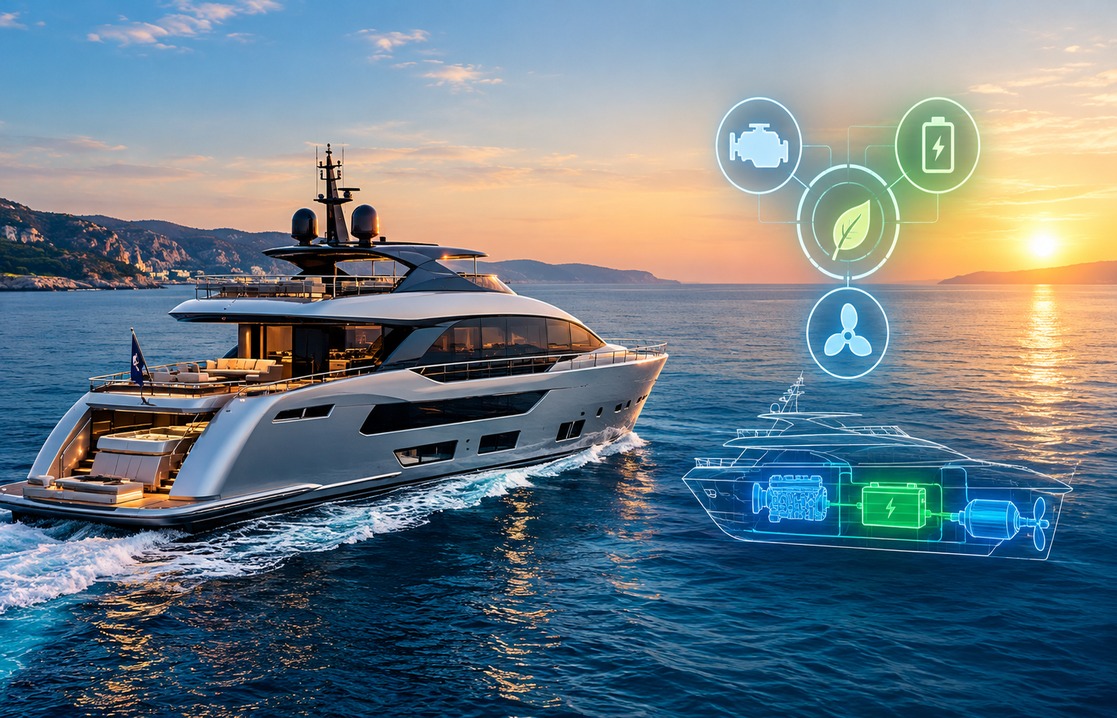
The luxury yachting industry is experiencing a technological evolution. As environmental standards tighten and owners demand greater onboard comfort, hybrid propulsion yachts have moved from an experimental concept to a defining standard in modern marine engineering. By combining traditional internal combustion engines with electric motors and high-capacity battery energy storage systems (BESS), hybrid yachts deliver quieter navigation, lower operational emissions, and enhanced fuel economy.
What is a Hybrid Propulsion Yacht?
A hybrid propulsion yacht integrates two energy sources to drive the vessel and power its hotel load: a fuel-powered internal combustion engine (typically diesel) and electrical energy stored in lithium-ion or LFP (lithium iron phosphate) battery banks.
Unlike traditional diesel-only setups, hybrid systems allow the yacht to switch dynamically between propulsion modes depending on speed, cruising distance, and port regulations.
Types of Hybrid Yacht Propulsion Systems
Modern naval architects utilize three primary hybrid architectures:
1. Serial Hybrid Systems
In a serial hybrid system, the propeller shaft is driven exclusively by electric motors. Diesel generators operate solely as range extenders, running at their optimal RPM to recharge the battery banks or feed current directly to the electric drive motors.
- Best for: Low-to-moderate speed cruising, silent harbor departures, and zero-emission operations in marine protected zones.
2. Parallel Hybrid Systems
A parallel hybrid system links both a diesel engine and an electric motor directly to the same propeller shaft via a specialized gearbox or clutch. Either source can drive the vessel independently, or both can engage simultaneously for peak power (boost mode).
- Best for: Versatile performance, long-range offshore passage-making, and high-speed cruising with intermittent silent electric modes.
3. Diesel-Electric Systems
Common in large superyachts, diesel-electric propulsion decouples the engines from the propulsion shafts entirely. Multiple variable-speed diesel generators produce electricity, which powers electric pod drives, azimuth thrusters, or conventional shaft motors alongside the vessel’s domestic electrical grid.
- Best for: Vessels exceeding 50 meters, maximizing interior layout flexibility, and reducing mechanical vibration.
Core Technologies Behind Hybrid Yachting
Modern hybrid yachts rely on several interconnected engineering innovations:
- Energy Storage Systems (ESS): High-density, water-cooled Lithium Nickel Manganese Cobalt (NMC) or Lithium Iron Phosphate (LFP) battery packs equipped with advanced Battery Management Systems (BMS) for thermal runaway prevention.
- Power Management Systems (PMS): Intelligent software that balances propulsion loads, peak shaving, and onboard hotel loads without requiring diesel generators to run during anchor periods (“silent night mode”).
- Regenerative Braking / Hydro-generation: Sailing yachts and motor-sailers utilize free-wheeling propellers under sail power to spin the electric motors in reverse, recharging the battery pack directly from ocean drag.
- Solar Integration & Micro-Turbines: Photovoltaic bimini tops and auxiliary solar decks supply supplementary power to mitigate parasitic domestic loads.
If you are exploring the pre-owned or new-build market to find a yacht engineered with these advanced powertrains, review curated listings on our dedicated yachts for sale portal to inspect vessels equipped with electric-drive and hybrid options.
Key Benefits of Hybrid Yachts
| Benefit |
Description |
| Near-Silent Cruising | Electric-only mode eliminates exhaust fumes, vibration, and low-frequency rumble during harbor docking or low-speed coastal passage. |
| Zero-Emission Anchor Mode | Battery banks supply 8–15 hours of silent hotel load (air conditioning, galley, audio/visual) without running noisy generators overnight. |
| Optimized Fuel Economy | Engines run consistently in their sweet spot of thermal efficiency, reducing total fuel burn by 15% to 30% over standard cruising profiles. |
| Access to Green Zones | Compliant with Tier III IMO regulations and permitted inside zero-emission marine parks (e.g., Norwegian fjords and sensitive coral reserves). |
| Extended Machinery Lifespan | Generator operating hours drop significantly, reducing servicing frequency and component wear. |
Cost Considerations: Capital vs. Operational
Investing in a hybrid yacht involves balancing initial capital expenditure (CapEx) against long-term operational savings (OpEx):
- Purchase Premium: A hybrid powertrain typically adds an upfront cost premium of 10% to 25% over an equivalent conventional diesel configuration, driven largely by marine-certified battery arrays, inverter systems, and bespoke switchboards.
- Maintenance & Battery Replacement: Marine battery modules generally offer a duty cycle of 8 to 12 years before requiring cell replacement or re-certification.
- Operating Savings: Owners save on engine maintenance hours, lube oil intervals, and bunkering costs, particularly in displacement vessels that frequently cruise at sub-hull speeds.
When evaluating current market inventory, buyers looking for both traditional performance and cutting-edge propulsion can explore available luxury yachts for sale to compare turnkey hybrid options against standard diesel platforms.
The Future of Sustainable Yachting
Hybrid propulsion serves as the bridge toward completely carbon-neutral marine recreation. Looking ahead, yacht manufacturers are pairing hybrid architectures with:
- Hydrogen Fuel Cells: Replacing diesel generators entirely with proton-exchange membrane (PEM) fuel cells running on compressed or liquid hydrogen.
- Alternative Biofuels: Drop-in fuels like HVO (Hydrotreated Vegetable Oil) and e-methanol running through internal combustion generators for immediate carbon reduction.
- AI-Driven Route & Power Optimization: Machine learning systems that calculate optimal battery deployment based on weather routing, tidal currents, and sea state.
As regulatory bodies raise sustainability benchmarks and marine charging infrastructure expands across Mediterranean and Caribbean marinas, hybrid propulsion continues to cement its place as the definitive choice for forward-thinking yacht owners.